

Preserving a culture
A culture is a way of looking at the world associated with a ‘praxis’, a way of being and acting. That of ‘indigenous’ societies integrates life and nature, which is not, or no longer, the case for ‘modern’ societies that have developed an urban and ‘rootless’ culture. In fact, contributing to the preservation of Kogi culture is not merely about helping the Kogi to remain Kogi on Kogi lands, but also about attempting to open a creative and respectful dialogue between our deadly modernity and the still-living traditions of indigenous societies, including the Kogi. It is not a question of becoming “Kogi” or “imitating” them, but of having the courage to engage in dialogue, in order to find the paths to a new alliance with this nature that sustains us and gives us life.
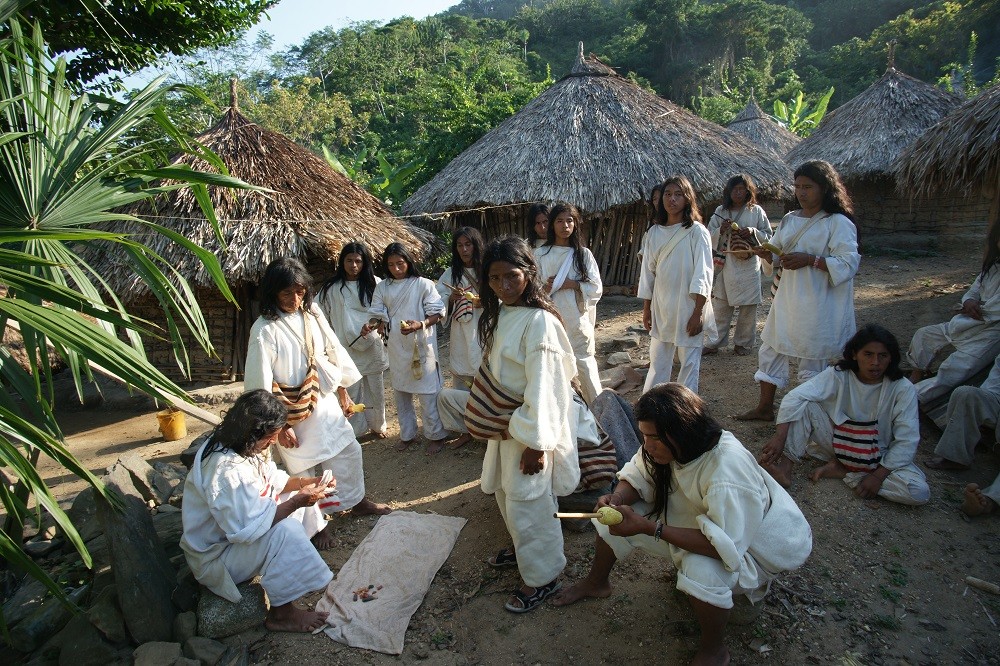
ISUN TUTU Project (weaving mochilas)
Tchendukua supports the practice of weaving, a central element of the culture of the peoples of the Sierra Nevada de Santa Marta. This initiative began in 2018, thanks to the support of the Belgian foundation Emergences and in partnership with the Arhuaco women’s association ASOWAKAMU. Through the seemingly simple act of weaving, the women revisit and pass on the essence of their culture, in its spiritual, territorial and social dimensions. A holistic, embodied approach that challenges our modern societies.
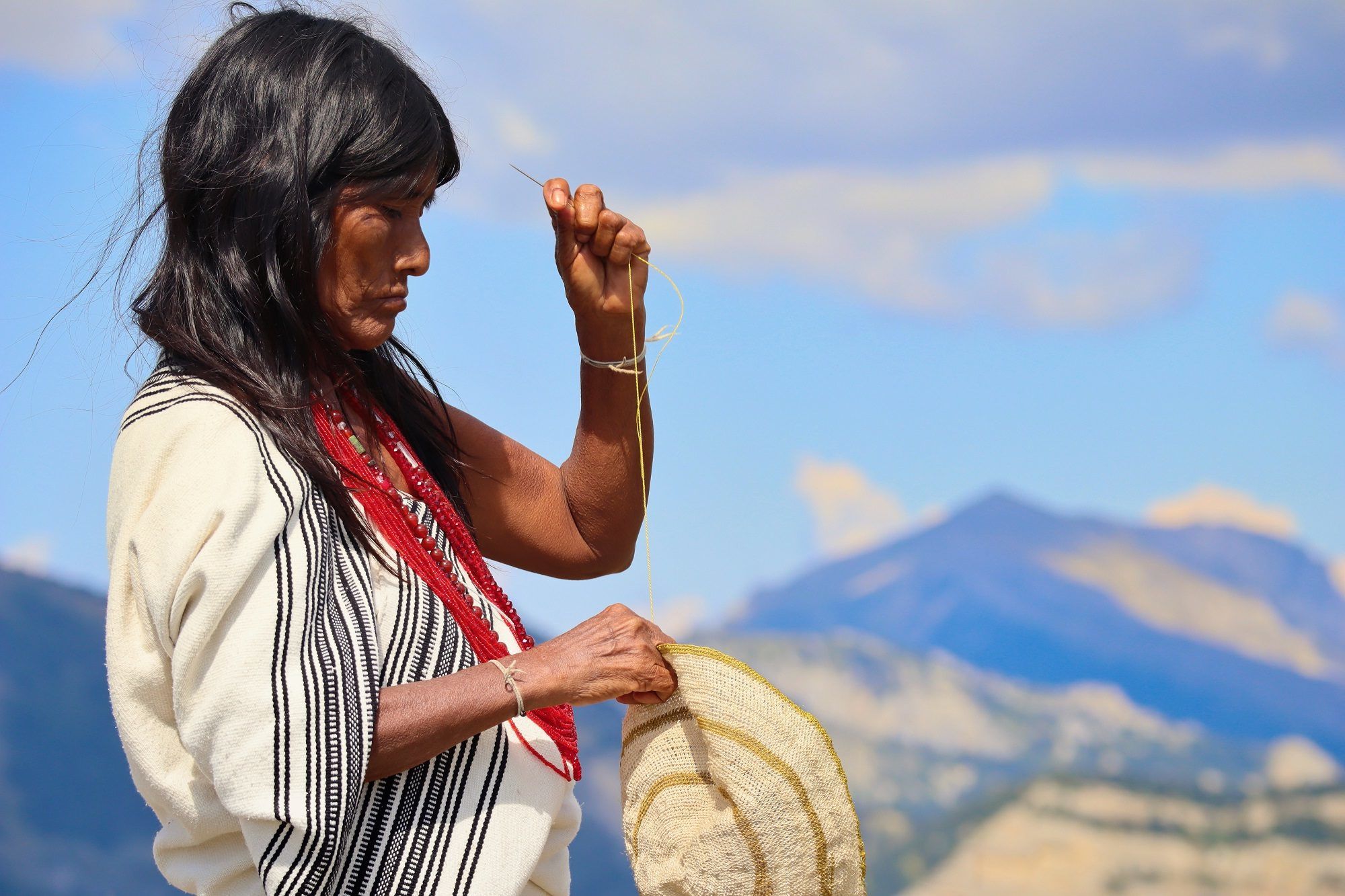
Weaving, a symbol of the bonds and connections that unite every thing and every phenomenon, is central to the Kogi way of thinking. They weave their clothes, their mochilas, their pack sacks, their ropes, right down to the Kogi ‘staff’ maps, just as they weave their lives by combining the controllable with the unexpected, shadow and light. Weaving embodied in a garment or a bag becomes the symbolic reflection of the inner ‘spiritual life’ of each member of the community as well as of the community as a whole. The Kogis carry within them the quality of life that they are individually and collectively capable of bestowing upon themselves.
Weaving is thinking; it is a moment of deep introspection and a search for harmony with what ‘is’. If this ancestral knowledge were to be lost, a large part of the Kogi’s philosophy of life would be at risk of disappearing. Weaving is practised by both men and women. Women weave small bags for their husbands, which symbolise life, fertility and union, using different colours that represent the ‘earth’ elements associated with their respective lineages and families of origin. Men build the looms and spin the cotton.
'Traditional' agricultural school
Tchendukua supports the Traditional Agricultural School project, which is gradually taking shape in the heart of the Mendihuaca Valley. Reclaiming land, as is the case for the Kogi families resettling in the Mendihuaca Valley, requires reconnecting with the ‘spirit of the place’ and then training and supporting the youngest Kogi in the specific spiritual and agricultural practices of these new lands. This “school” is also intended to be a place for educational exchange with other agricultural approaches, with a view to sharing and opening up practices.
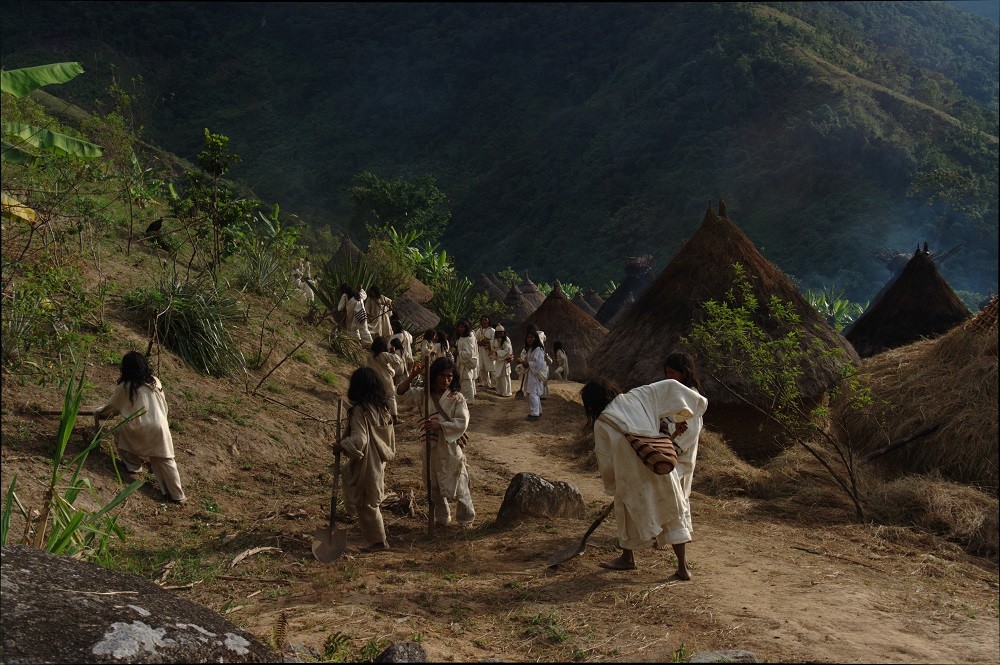
The relationship that the Kogis maintain with the territory, regarded as a ‘territorial body’, is of the same nature as the relationship that a carer, doctor or psychoanalyst is able to maintain with a patient. A “holistic” approach, “territorial acupuncture” points or Ezuamas: for the Kogis, territories are more “subject” Landscapes than “object” Landscapes. This connection to the spirit of places leads to a relationship with the land and agricultural practices akin to what we in modern societies call ‘permaculture’.
Restoration of traditional ritual objects
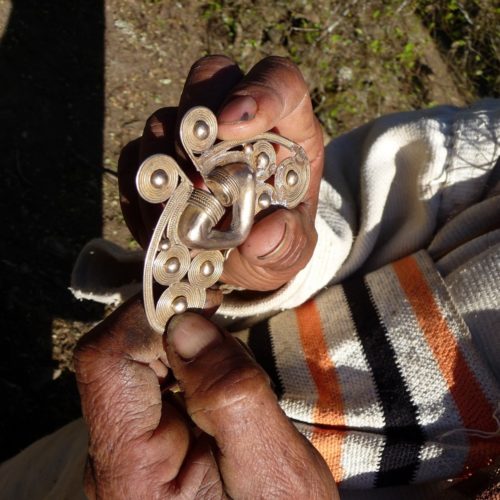
At the request of the mamas, Tchendukua endeavours to track down traditional ritual objects, in order to return them to the spiritual authorities of the Sierra who require them for their ceremonies.
In ‘traditional’ societies, such as that of the Kogi people, objects are often symbolic vehicles, conduits of energy and spiritual practices, particularly divination, healing or the preparation of specific ceremonies. These objects and their uses represent a form of ‘language’ that connects them to the subtle world of ‘Sé’, which precedes forms and things. Indeed, they cannot be separated from those who, within a complex web of relationships and interpretations, still know how to use them: the mamas and the Sagas, guardians of the world’s balance.
Made of Tumbaya (a mixture of gold and copper) and ceramic, these objects have, since the arrival of the colonizers, been the subject of systematic looting that has never ceased and continues to this day. In the 1970s and 1980s, the ‘guaquejos’, the grave robbers, were officially registered and authorised by the Colombian authorities to ransack hundreds of pre-Columbian tombs, whose remains—whether real or imagined—captivated the imagination of the settlers living in the foothills of the Sierra. Armed with a pair of boots, a jute sack, a machete, an iron bar (to search for the tombs), a pickaxe and a few provisions, they would venture deep into the dense, rustling forest in search of the lost gold of the Tayronas. Within a few years, fabulous treasures were unearthed, fortunes were amassed in a matter of days, accompanied by a string of murders, settling of scores and disappearances that accompany the ‘madness’ of gold—the very gold used to ‘heal the earth’, for gold is a symbol of high spirituality for the Kogis.