Colombia: Between progress and regression, the rights of the peoples of the Sierra Nevada de Santa Marta reflect the country’s political tensions
Make a donation: click here
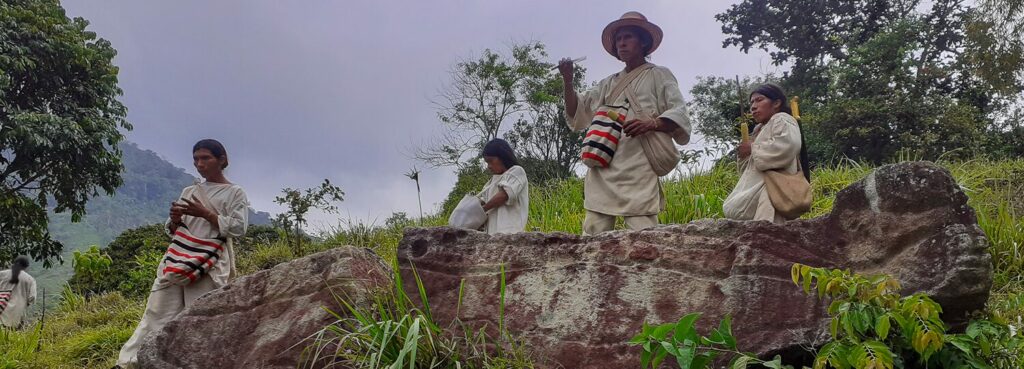
After it was first adopted and then annulled, the Colombian government – which remains in office until July 2026 – adopted Decree No. 0514 of 19 May 2026, which reinstates the legal protection of the Black Line (Línea Negra). The previous decree had been annulled by the Council of State on procedural grounds. This new decree reaffirms the territorial, cultural and spiritual rights of the Kogi, Arhuaco, Wiwa and Kankuamo peoples, whilst incorporating a consultation process with the communities of African descent living in the area. Let us hope that this new decree is not once again called into question by the newly elected President, Abelardo de Esprilla, a representative of a school of thought that regards indigenous peoples as “obstacles to progress”. The Black Line is a symbolic line linking the sacred sites which, according to the peoples of the Sierra Nevada de Santa Marta, ensure the balance between human beings and the natural world. Its recognition is a key lever for the protection of ecosystems and the defence of indigenous peoples’ rights, and more broadly for the defence of all living things. For 29 years, Tchendukua – Ici et Ailleurs has been working in partnership with the peoples of the Sierra to secure the restitution of their ancestral lands and the recognition of their knowledge and rights, both in Colombia and in France. This legal breakthrough serves as a reminder that the protection of all living things also depends on the recognition of the specific rights of the peoples who act as their guardians.
To become a member of the Tchendukua association: click here
To make a donation: click here